
Reviewed by Dr. Goh Ming Chun, MD (Universiti Putra Malaysia), MAC, AAAM. Trained at the Plastic & Reconstructive Surgery Department, Penang General Hospital. Specialises in scar management.
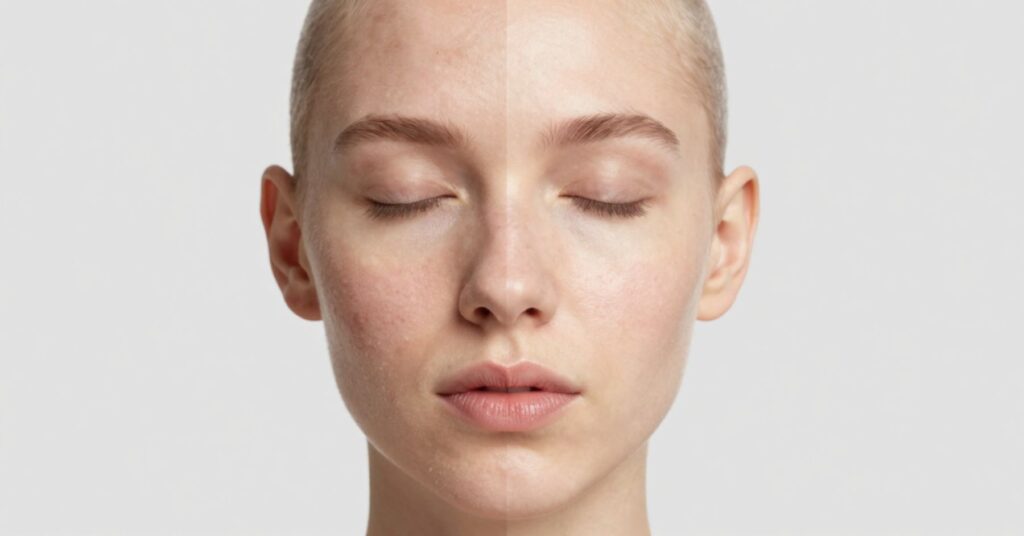
Treating acne scars without knowing the type is a waste of money. Different scar types have completely different structures, what works brilliantly on one can do almost nothing for another. Here’s how to identify yours and what the evidence says about treatment.
The 4 Types of Acne Scars

1. Icepick Scars
What they look like: Deep, narrow, V-shaped holes like the skin was punctured with a sharp instrument.
Why they form: Deep cystic acne that destroys a narrow column of tissue.
Treatment: The hardest type to fix with surface-level treatments. RF microneedling helps over multiple sessions. Punch excision followed by resurfacing is often the most effective approach.
2. Boxcar Scars
What they look like: Wide, shallow depressions with defined vertical edges.
Why they form: Inflammatory acne destroys collagen over a wider area.
Treatment: Responds well to RF microneedling, fractional laser, and subcision to break up fibrous bands pulling the base down.
3. Rolling Scars
What they look like: Wavy, undulating skin surface, depressions with sloping edges.
Why they form: Fibrous bands beneath the skin tether the surface downward.
Treatment: Subcision is often the first step. Combine with RF microneedling, Rejuran S, or filler for temporary elevation while collagen rebuilds..
4. Hypertrophic and Keloid Scars
What they look like: Raised, thickened scar tissue. Hypertrophic stays within the wound boundary. Keloid extends beyond it.
Why they form: Overactive wound healing which is more common in Asian skin types.
Treatment: Different approach entirely by steroid injections, silicone sheets, targeted energy devices.
Treatment Comparison by Scar Type
| Scar Type | RF Microneedling | Rejuran S | Subcision | Punch Excision | Steroid Injection |
|---|---|---|---|---|---|
| Icepick | ✓ (partial) | ✓ | – | ✓✓ | – |
| Boxcar | ✓✓ | ✓ | ✓ | – | – |
| Rolling | ✓✓ | ✓ | ✓✓ | – | – |
| Hypertrophic | – | – | – | – | ✓✓ |
| Keloid | – | – | – | – | ✓✓ |
What About Pigmentation?
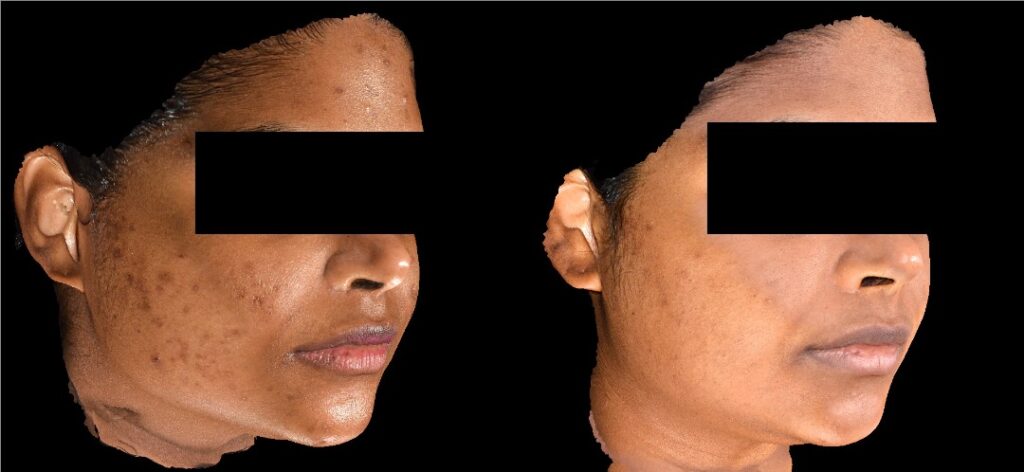
Important: Post-inflammatory hyperpigmentation (PIH), the dark spots left after acne is not a scar. It’s a pigmentation issue and does not respond to the same treatments as textural scars. Don’t treat them the same way.
Active Acne First, Then Scars
No aesthetic clinic should be treating scars while you still have active breakouts. Active acne inflammation will continue creating new scarring and undermine any treatment. Getting acne under control is always step one.
How Many Sessions Are Needed?
Mild scarring: 2-3 sessions with noticeable improvement
Moderate scarring: 4-6 sessions for meaningful texture improvement
Severe/mixed scarring: Combination protocol, 6+ sessions
Results are cumulative. Skin continues improving for 3-6 months after each session as new collagen matures.
Frequently Asked Questions
Is RF microneedling or laser better for acne scars in Malaysia?
Both have strong evidence. RF microneedling has an advantage for darker skin tones will have lower risk of post-inflammatory hyperpigmentation compared to ablative laser. The right choice depends on your scar type and skin tone.
Can Rejuran treat acne scars?
Rejuran S can help improve texture and support healing when combined with other procedures. It is not a standalone scar treatment. See which Rejuran type is right for you.
Are acne scar treatments painful?
Most procedures use topical numbing cream. Downtime varies: RF microneedling = 1–3 days redness; subcision = potential bruising for 1–2 weeks.
Can I treat acne scars at home?
Topical treatments (retinoids, niacinamide, vitamin C) can improve mild texture and pigmentation. They cannot restructure deep atrophic scars that requires clinical collagen stimulating treatments.
Who is not suitable for RF microneedling?
Active acne, active skin infection, pregnancy, or certain skin conditions. A consultation assessment is required.